
What Lies Beneath the Knowledge?
What Guy Claxton's learning river and James Mannion's "learning to be" might mean for geography

Jambo
Hope you’re well. This one follows on from my last post, where I explored the question of what we want our geography students to be.
Big Picture 🌍
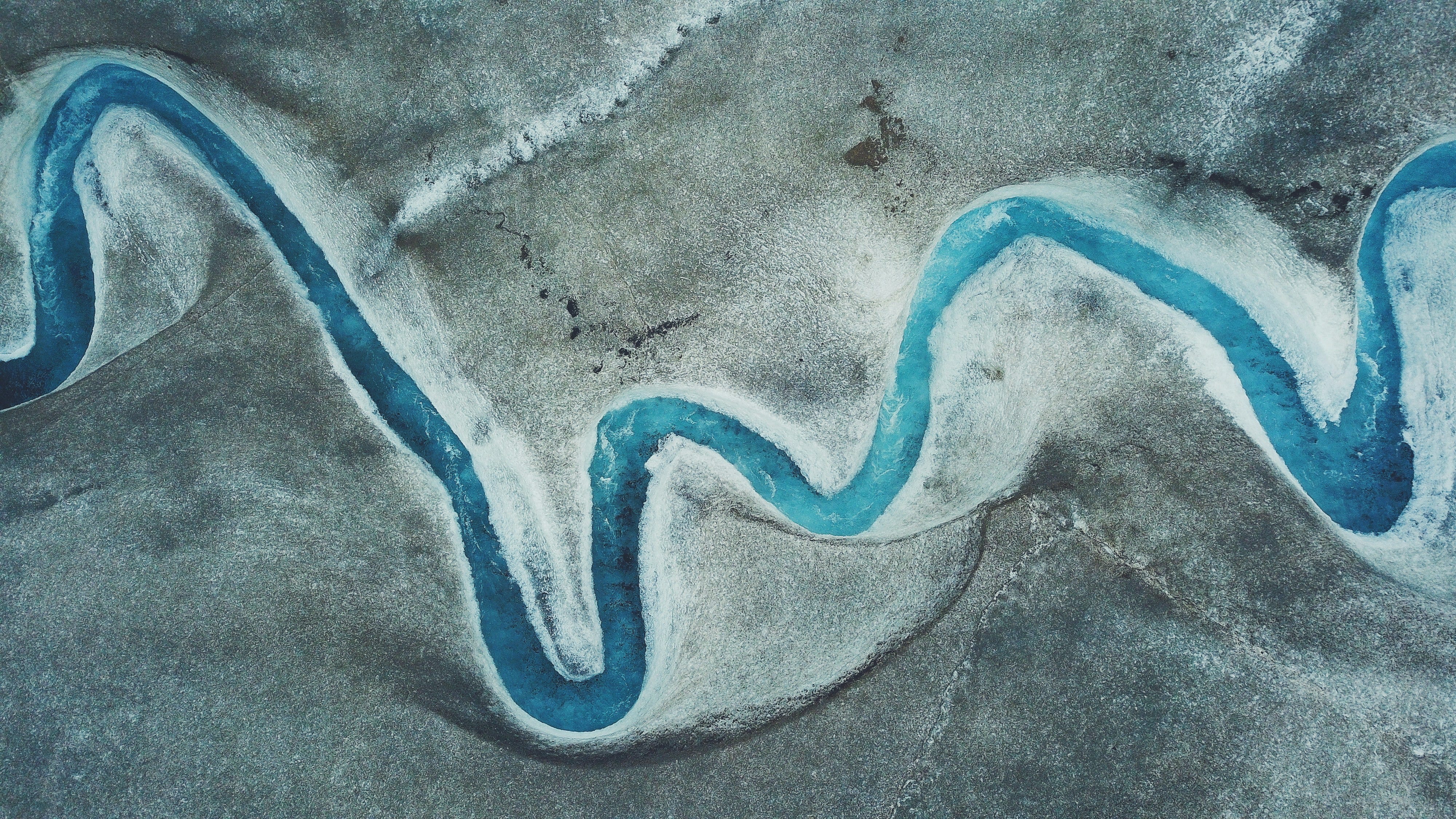
Guy Claxton uses a lovely metaphor: the learning river. At the surface, the water moves quickly — this is the curriculum, the subject knowledge, the content we deliver. Below it runs a second current: skills and literacy, the ability to process and apply information. And beneath that, moving more slowly and harder to see, flows the deepest current of all — attitudes, dispositions, and habits of mind
.
The deeper you go, the slower the current moves. And the slower it moves, the harder it is to observe and measure. Claxton’s argument is that these deeper currents matter enormously. They shape how students relate to learning itself: whether they persist when things are difficult, whether they’re curious or compliant, whether they can collaborate and reflect.
James Mannion argues that education’s current emphasis on cognitive science — valuable as it is — has narrowed our view of what learning means. His concern is that we’ve become very good at thinking about learning to know and learning to do, but much less attentive to learning to be. Not what students know, not what they can do, but who they are becoming. Learning to be curious. Learning to be sceptical. Learning to be kind to yourself. Learning to be someone who reads every day — not just someone who can read.
It might be that both of these ideas — the deep current and the learning to be agenda — connect powerfully to what geography can offer. And perhaps more than many subjects, geography has a natural home for this kind of thinking.
Here’s what I mean:
1. Geography already works at every level of the river. The surface current is the content: tectonic processes, development indicators, river landscapes. The middle current is the skills: map reading, data interpretation, extended writing. But geography also works in that deeper current — it shapes how students see the world. The habit of noticing landscape. The instinct to ask “why here?” The disposition to hold complexity rather than reach for simple answers. Those aren’t knowledge or skills. They’re something closer to what Mannion means by learning to be. They’re the geographical dispositions that stay with a student long after they’ve forgotten the specific details of their coastal management case study.
2. “Learning to be” in geography has a particular flavour. Mannion’s list includes things like learning to be curious, compassionate, reflective, open-minded. All valuable. But there’s a sense in which geography adds something specific to each of those. Learning to be curious about places. Learning to be compassionate across distance and difference. Learning to be reflective about your own position in a connected world. Learning to be open-minded about why people in very different circumstances make the choices they make.
3. The deep current needs curriculum time, not just good intentions. This is where Claxton’s metaphor is most useful. The deep current moves slowly. You can’t build geographical dispositions in a single lesson or a single unit. They form through repeated encounters — through coming back to the same habits of thinking across different topics, different scales, different places, over years. A student who has spent three years noticing interdependence in rainforests, cities, coastlines, and global trade isn’t just carrying knowledge. They’re carrying a disposition — a way of seeing the world as connected. That disposition is the deep current. And it only forms if the curriculum gives it time.
4. We can make the deep current visible without making it a separate subject. One of Mannion’s important points is that learning to be doesn’t require a new subject or a new timetable slot. It’s not PSHE or character education bolted on from outside. It’s woven into how we teach and what we value. Geography is well placed for this. When a teacher pauses during a lesson on migration to ask “what would it feel like to leave everything behind?” — that’s the deep current. When a class debates whether a coastal defence protects some communities at the expense of others — that’s the deep current. When a student looks at a photograph of a place they’ll never visit and tries to understand it on its own terms — that’s the deep current. It’s already happening. The question is whether we notice it, name it, and protect the curriculum space for it.
There’s a sense in which the knowledge-rich movement has been enormously positive for geography — it has sharpened our thinking about what students need to know and why. Part of what makes this interesting is that Claxton and Mannion are asking us to look at the whole river, not just the surface. What lies beneath the knowledge? What dispositions, habits, and ways of being are we cultivating — or failing to cultivate — through the geography we teach?
Why This Matters 💡
This isn’t a call to abandon knowledge-rich teaching. It’s a call to recognise that knowledge-rich and disposition-rich aren’t in tension — they depend on each other. You can’t develop the disposition to think geographically without knowing geography. And knowledge without disposition is inert — it sits in long-term memory but doesn’t change how a student sees the world or acts in it.
For geography HoDs, this raises a practical question about curriculum review. When you look at your schemes of work, the knowledge and skills are usually clearly mapped. But the dispositions rarely are. What geographical habits of mind is each unit building? Where do students encounter them again? Are they ever made explicit — or are they the invisible architecture that only the teacher can see?
A practical move: try mapping three or four geographical dispositions alongside your existing curriculum. Something like: notices connections between places and processes, holds multiple perspectives without rushing to judge, reads the world as dynamic rather than static, sees themselves as part of a connected humanity. For each unit, ask: does this unit develop this disposition? How? If the answer is “implicitly, maybe,” that’s worth a department conversation.
🎓 Guy Claxton’s The Future of Teaching develops the learning river metaphor in detail. James Mannion’s Substack — Rethinking Education — is well worth following, particularly his recent posts on learning to be. For the geography-specific connection, David Lambert’s GeoCapabilities work explores how geography education can enhance young people’s capabilities and agency — which sits naturally alongside this dispositional agenda.
In a Nutshell 🥥
Claxton’s learning river metaphor reminds us that beneath the surface current of knowledge and skills runs a deeper current of attitudes, dispositions, and habits of mind — slower to form, harder to measure, but arguably the most lasting thing education does.
Mannion’s “learning to be” ideas ask what kind of people education is helping students become — not just what they know or can do.
Perhaps geography has a natural home for both of these ideas. The question is whether we notice the deep current, name it, and protect the curriculum space that allows it to develop.
Stay curious.
Paul 🌍